Who are the K-chefs helping to popularise Korean cuisine around Asia?
Advertisement
Experiences
Who are the K-chefs helping to popularise Korean cuisine effectually Asia?
From Singapore's Sun Kim to Bangkok'south Lauren Kim, Asia's leading proponents of Korean cuisine evidence that in that location'south so much more to get your teeth into than Korean BBQ.
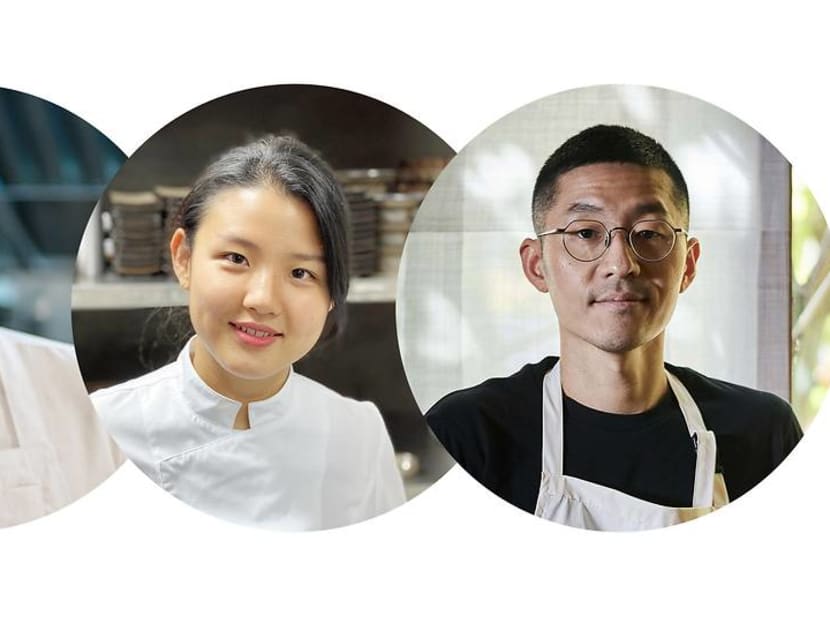
Singapore's Sun Kim, Bangkok'southward Lauren Kim and Seoul's Mingoo Kang are amongst the chefs spearheading the Thou-culinary wave across Asia. (Photos: Dominicus Kim, Lauren Kim, Mingoo Kang)
14 Aug 2022 06:30AM (Updated: 05 Jul 2022 12:47AM)
Long earlier jjapaguri noodles from Parasite became one of Asia's hottest dishes, Korean chefs accept wowed the palates of gourmands and casual diners alike. With technical prowess, executional excellence and a reputation for innovation, a number of them have also taken their considerable talents to cities beyond Asia.
Alongside the explosion in popularity of Korean culture, in the form of K-pop, movies and One thousand-dramas, these 1000-chefs take truly blazed a trail, showing the diverseness of their nation's classic dishes just also how creativity has inspired them to new culinary heights.
One of the most prominent names leading the charge is Chef Mingoo Kang. I of Asia's nigh accomplished and exciting Korean chefs, with his Seoul restaurant Mingles belongings ii Michelin stars likewise as thirteenth spot in Asia's 50 All-time Restaurants, the softly-spoken maestro has just opened fine dining destination Hansik Goo in Hong Kong.

His tasting card twists Korean classics, elevating flavours that are served in an elegant, calming infinite conceived by JJ Acuna / Bespoke Studio. Standouts from the eight-course lunch tasting carte du jour (HK$780/South$140) included an exceptional roulade of chicken breast and leg, atop a samgye risotto that boasts the comforting and warming notes of Korea'due south famed ginseng chicken soup.
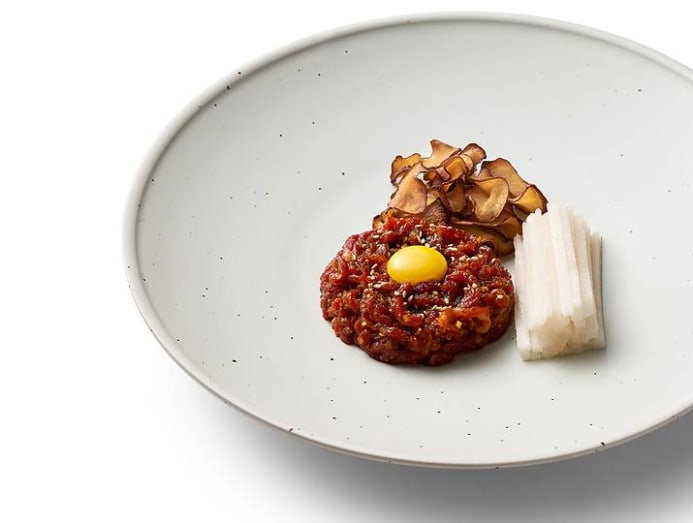
Other twists on Korean traditional dishes features multiple versions of jang, the fermented sauce institute on whatsoever Korean tabular array; a delicious beef tartare; as well as the familiar delights of bulgogi beef, to exist wrapped in lettuce leaves, ssam style.
From Hong Kong to Bangkok, where Lauren Kim is a young chef celebrating the nutrient of her homeland. She comes from a family of famed restaurateurs and chefs in Seoul, but 13 years ago she moved to Bangkok when her mother opened a restaurant there.
After training at Le Cordon Bleu and time in restaurants such as Hisa Sushi in Osaka, she opened her starting time restaurant, Banjoo. Today she has a second Banjoo, Charm Korean Steakhouse and even her own range of Korean sauces, pastes and ingredients called Banjoo Banchan, all made in-house using recipes direct from her grandmother.
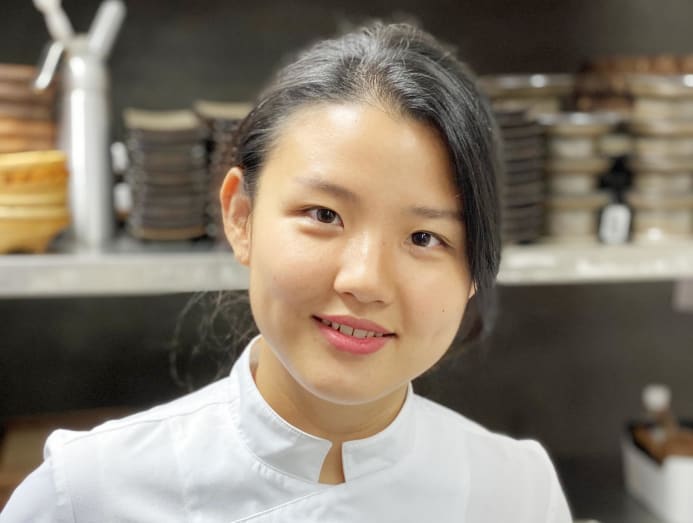
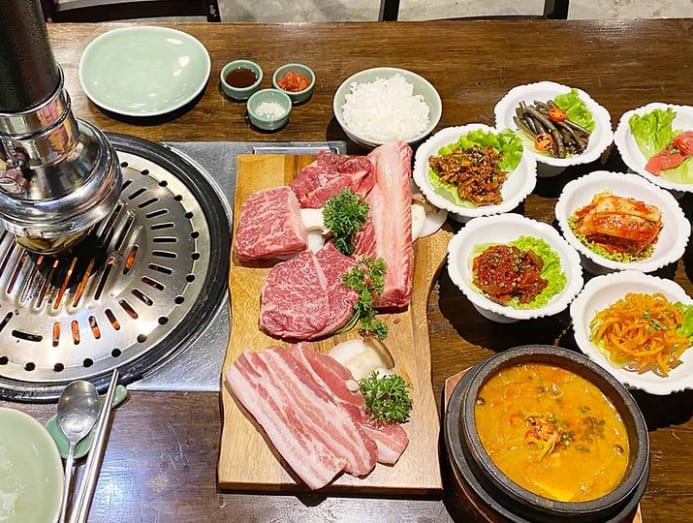
She explained how she feels perceptions of Korean nutrient have inverse in contempo years: "On one side, Korean food has get more accessible over the world and won some hearts. That Oldboy scene of the protagonist eating san-nakji – raw octopus that is even so squirming – has gradually given mode to more visually appealing and tasty dishes, while in that location are fun experiences similar Korean BBQ and the superfood status of kimchi.
"But on the other side, Korean nutrient is vast and complex, traditionally dull nutrient in preparation and in eating. To give you a perspective, it takes us two days to brand natto ferment to use in our dishes. It take four weeks to ferment garlic to exist able to use in our dishes. And then on… it's a slow prep cuisine. Natural umami takes fourth dimension to develop."
Meta in Keong Saik Route needs picayune introduction to Singapore foodies, having blazed a trail with Chef Sun Kim'south mix of Korean heritage, Japanese technique and Western preparation. Curt for 'metamorphosis', Meta lets Chef Kim take diners on remarkable culinary journeys that underscore the constant flux of evolving dishes.
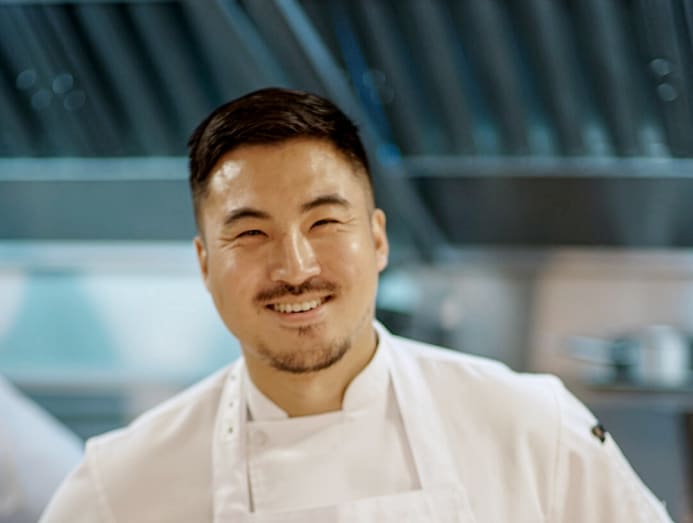
READ> How Singapore's chef Sun Kim is pivoting from Michelin-starred cuisine to Korean comfort food and home-manner classics
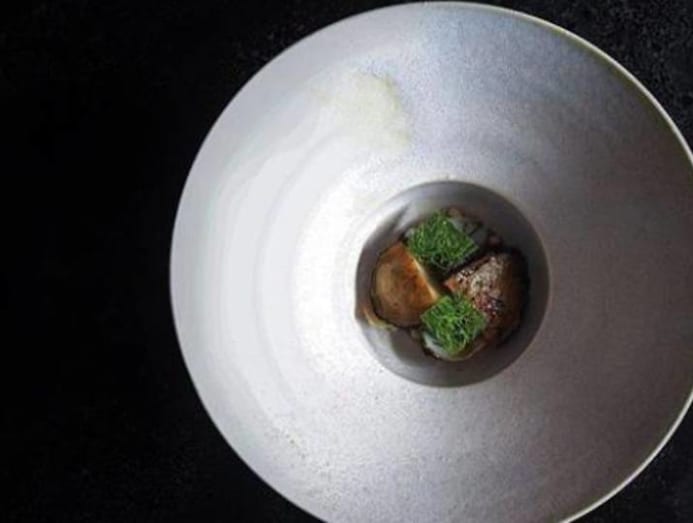
A case in signal is a dish that Kim says defines both him and Meta, his abalone from Jeju.
"Being Korean, I wanted to showcase the good quality of seafood from Republic of korea and Abalone from Jeju island is known to be of the highest quality around the globe.
"The abalone dish has ever been evolving, I started off showcasing information technology served with a dashi multigrain risotto (buckwheat, barley, lentils), so changing the way in which the risotto is cooked by using a flower crab stock. Now in the latest version of this dish I utilise the whole abalone, by using the abalone livers to make a sauce that goes perfectly with the multigrain risotto."
He as well explains why he thinks Korean food has become then popular, both in Asia and globally: "Korean food is very approachable equally the hearty portion sizes are more often than not bigger than about and easily shared amongst family and friends. The gustation contour is quite different to other Asian food as Koreans love to preserve vegetables such equally cabbage, radish, garlic shoots, perilla etc. I experience this is what entices people to endeavour Korean food in the outset place."
"Korean food is very outgoing as the hearty portion sizes are mostly bigger than near and easily shared amongst family and friends." – Sun Kim
In Shanghai, Ryu Taehyeok at Jeju Izakaya is another chef changing and challenging perceptions of Korean cuisine. Notoriously difficult to book, the tiny spot in a typical Shanghai house has won multiple awards and public acclaim for its inventive cuisine.
Chef Ryu, known as Tom, explained the Korean scene in Shanghai: "In the past, inexpensive, traditional dishes such as Korean BBQ, Bibimbap and Bulgogi were generally perceived as Korean food but nowadays there have been many new and creative attempts, which have led to more various views. Korean nutrient has recently been very popular in Shanghai and some of the popular Korean restaurants are difficult to volume."
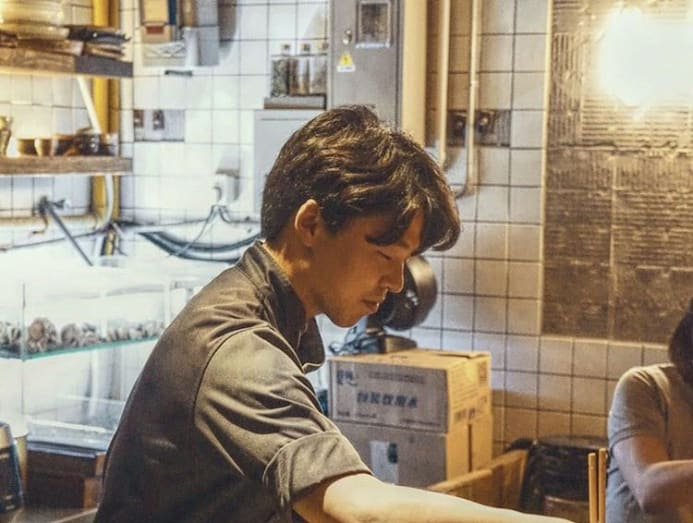
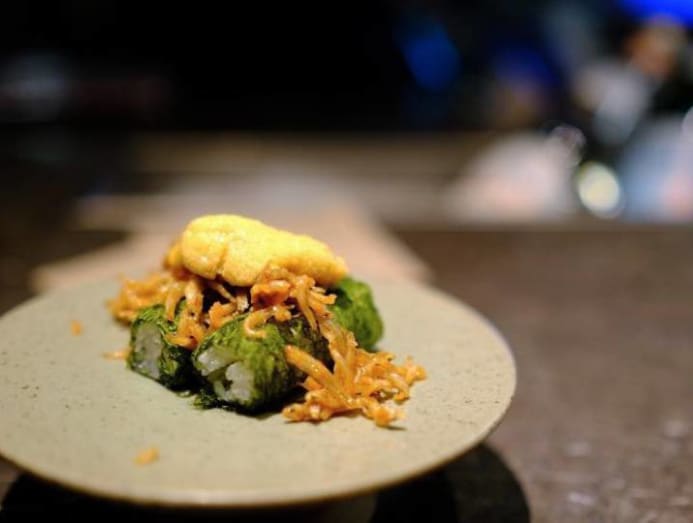
He said that three dishes are indicative of their approach, starting with Chungmu Gimbap, a dish with rice mixed with sesame oil that is wrapped in sweetness laver, eaten with semi-dried anchovies and fresh uni mixed with gochujang paste.
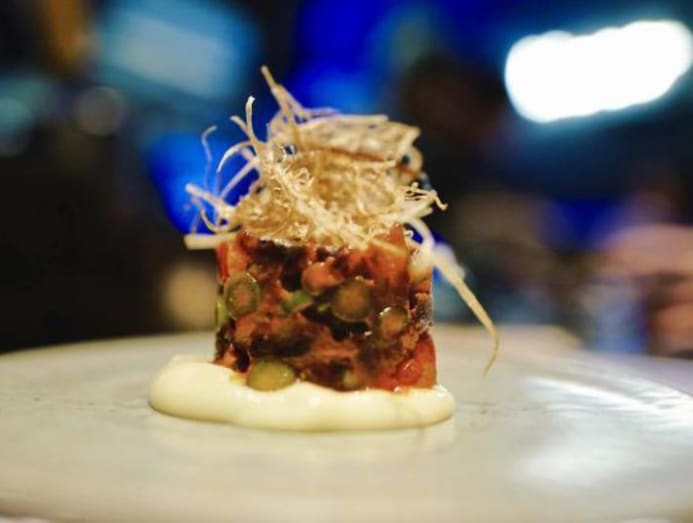
Finally to Seoul itself and a woman recently named Asia'due south Best Female Chef, Cho Hee-Sook. She has spent more than twoscore years in the manufacture, combining running iconic restaurants with educational activity the next generation every bit a professor at Woosong University. Information technology's no surprise, then, that she'due south known as the "Godmother" of Korean cuisine and feted by chefs such as Mingoo Kang.
Today she'south chef-owner of Hansikgonggan, a eating house that preserves the foundations of Hansik (Korean Cuisine) from Royal palace cuisine through to local dishes. The restaurant offers scenic views of Changdeokgung royal palace and serves "traditional flavours with contemporary sensibilities", while they also hold 1 Michelin star.
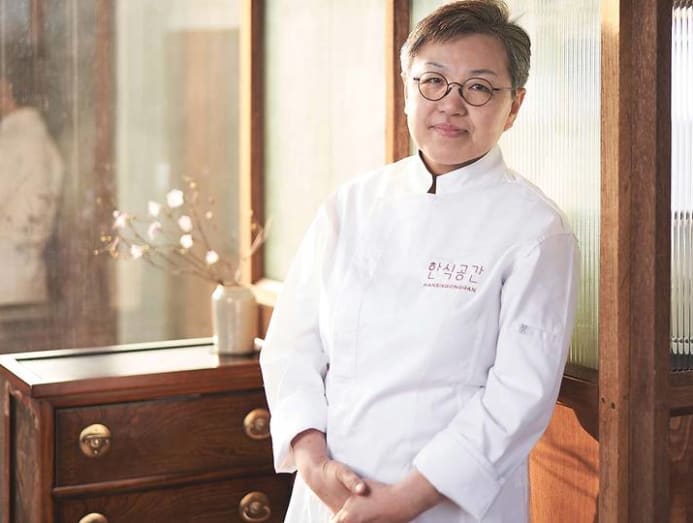
A dish she chooses to highlight – although it's a difficult choice to make – is bugak: "Bugak is made by thinly slicing vegetables or seaweed that are coated in a sticky rice paste. It has to exist dried for upward to three days and then deep-fried before serving.
"People usually think Korean food is spicy and salty. But I notice more than and more… international foodies are starting to recognise how subtle and delicate the cuisine is. Traditional Korean jang (sauces), kimchi and jang-a-chi (pickled foods), preserve seasonal ingredients for a long time – techniques that were passed downward past our wise ancestors."
That wisdom is something that has enabled Korean cuisine to survive and flourish, with the responsibility taken on today past leaders like Chef Cho.
"I feel very responsible for the title of 'Godmother'. Passing downwards my knowledge of traditional Korean nutrient is very important too. Just I desire them to sympathise that what they do tin contribute to the wellness and mental well-being of guests. Working as a chef can too immensely impact the environs. I hope for them to pay particular attending to this."
With that sort of dedication and focus on the bigger picture, information technology's clear that Korean cuisine has a bright future in Asia – and well beyond.
"People commonly call back Korean food is spicy and salty. Simply I notice more and more than… international foodies are starting to recognise how subtle and delicate the cuisine is." – Cho Hee-Sook
Sentinel> In downtown Seoul, humble temple food given a makeover and a Michelin star
Source: https://cnalifestyle.channelnewsasia.com/experiences/korean-chefs-helping-to-popularise-korean-cuisine-in-asia-247571
0 Response to "Who are the K-chefs helping to popularise Korean cuisine around Asia?"
Post a Comment